
Morgellons Disease ek ajeeb aur confusing skin condition hai jo logon ko physically aur emotionally takleef deti hai. Isme skin par chhilay, itching aur ajeeb fibers nikalne jaise symptoms shamil hote hain jo zindagi ko mushkil bana dete hain. Har case alag hota hai, aur doctors ke liye bhi isko samajhna challenging ho sakta hai. Is blog mein hum is disease ke causes, symptoms, aur treatments ko simple aur clear tareeke se samjhayenge, taake aap aware aur prepared rahen.
Is Morgellons disease real? Understanding the Controversy
Let us tackle the big, heavy question right away. So, is Morgellons disease real? Yes, absolutely. The pain you feel is not made up. Your skin hurts. You feel that awful crawling sensation every day. The itch is enough to drive anyone crazy. You are living it, and your experiences are entirely valid.
But here is where things get a bit messy. Doctors do not always agree on the cause. When looking into what causes Morgellons disease, doctors usually land in two different camps.
Most doctors believe it is linked to how your brain talks to your skin. Sometimes, the brain sends a false alarm. It tells your skin that bugs are there, even when they are not. Doctors often call this delusional parasitosis. That sounds like a scary, insulting term, right? But it is not meant to be mean. It just means the brain has false beliefs about bugs.
Imagine a car alarm that honks loudly when a tiny leaf hits the windshield. The car is perfectly safe, but the alarm is still screaming. Your brain is doing the exact same thing to your skin. Because of this, some doctors treat it as a mind-body mix-up. Your brain and your skin are just not communicating well.
On the flip side, some patients and researchers think there is a physical germ causing the trouble. They look for physical clues. But big studies have not found a single bug to blame. This disagreement can be super frustrating for you. You just want answers. But here is the good news: you do not need to solve this medical mystery to start feeling better. You just need to quiet the alarm.
Identifying the Hallmark Symptoms
So, what exactly does this condition look and feel like? The signs can be both physical and emotional.
First, let us talk about the physical signs. The biggest complaint is the sensation of bugs crawling under the skin. The medical word for this is formication. It feels like ants are marching up and down your arms, legs, and back. This leads to intense itching. You just want to scratch until it stops, but scratching never seems to help.
Because of all that scratching, people often get painful skin lesions and sores. These wounds can pop up out of nowhere. They take a very long time to heal. When they finally do close up, they can leave dark, lasting scars behind.
Then, there is the strangest symptom of all. Many folks notice thread-like fibers coming out of their sores. Sometimes they look like tiny fuzz balls. Other times they look like little black specks. People often describe seeing fibers or threadlike material under skin. Scientists have looked at these microscopic fibers under strong magnifying glasses. Often, they turn out to be tiny pieces of clothing or hair that got trapped in the sticky wounds. But to the person suffering, they look very scary.
The symptoms do not stop at the skin. This illness is exhausting. Many people feel a deep, heavy tiredness. They get brain fog, making it hard to think clearly or remember things. Achy joints and sore muscles are also common.
Some folks also notice a link to other health problems. For example, some patients also have hypothyroidism, which means their thyroid gland is too slow. Others wonder about tick-borne diseases. You might have heard people talk about an association between this illness and Lyme disease. That is an illness caused by a specific germ named Borrelia burgdorferi. While the exact link is still debated, it shows just how complex this illness can be. Your whole body simply feels out of whack.
What Are the Best Ways to Stop Skin Picking?
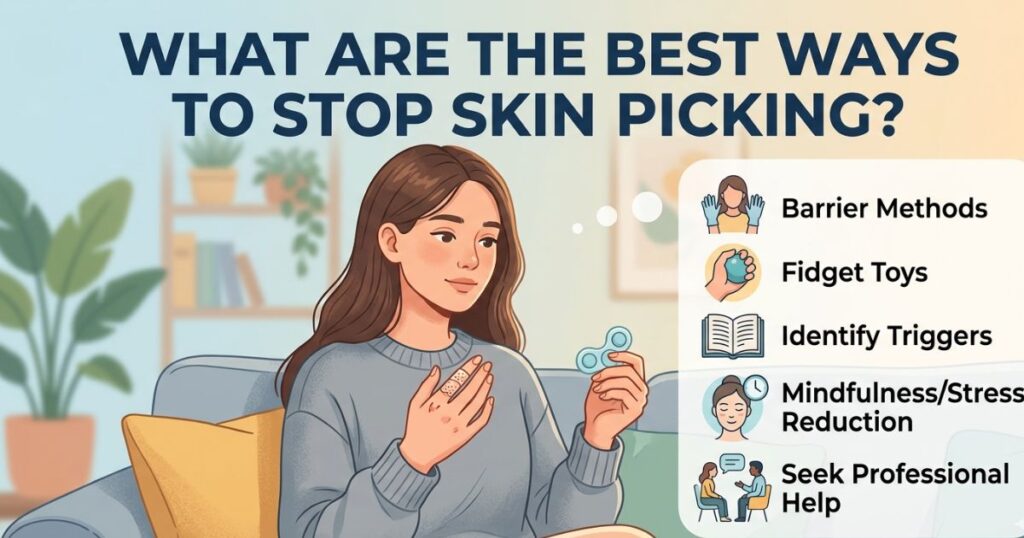
If you are dealing with this, you probably scratch. A lot. It is totally normal to want to dig out whatever is bugging you. But picking at your skin makes things much worse. It opens up your skin to bad germs and creates deep scars.
So, how to stop skin picking from Morgellons? It takes a mix of good skin care and gentle brain training. Here are 3 simple steps to help you stop.
Treat the Wounds Like a Pro
First, you have to protect your skin. Keep your sores clean and covered. Use a gentle soap and warm water. Avoid harsh chemicals that burn. Put on a thick, healing ointment and cover the spots with soft bandages. If you cannot see or touch the sore, you are less likely to pick at it. If the itch is driving you nuts, try placing a cool, damp cloth over the area. Cold temperatures can numb the itchy nerves.
Keep Your Hands Busy
When the urge to pick hits you, redirect your hands. Give your fingers a fun job so they leave your skin alone.
- Play with a squishy stress ball.
- Squeeze some modeling clay.
- Knit, draw, or do a puzzle.
- Hold a smooth, cool stone in your pocket.
Try Brain Training
Because the urge to pick starts in the brain, talking to a pro really helps. Mental health therapy is a total game changer. A specific type called Cognitive behavioral therapy (CBT) is super helpful. CBT teaches you how to spot the trigger that makes you want to pick. Then, it gives you tools to stop the habit. Let us say you feel stressed, and your brain says, “Scratch!” CBT helps you pause and say, “No, I will squeeze my stress ball instead.” It is like rewriting the software in your mind.
Navigating the Medical Stigma: Finding a Sympathetic Doctor
One of the hardest parts of this journey is dealing with doctors. You might have felt ignored or brushed off. Medical gaslighting—when a doctor makes you feel like your pain is silly—is heartbreaking. Many folks go from doctor to doctor. They get endless tests. They spend a ton of money. It is completely exhausting.
Let us talk about how doctors diagnose Morgellons disease. Since there is no simple blood test for it, doctors have to play detective. They look at your skin, check your history, and rule out other things like allergies or typical bug bites. Sometimes, this takes a very long time.
Your goal is to find a doctor who listens to you. You want a sidekick, not a boss who ignores your ideas. Finding doctors who treat this specific issue with kindness is key. You might need a whole team! A skin doctor to heal your sores, and a mind doctor to calm your nerves.
When you go to the doctor, try these 3 tips:
- Bring a friend: A loved one can hold your hand and take notes.
- Write it down: Bring a list of your top questions so you do not forget them.
- Stay open: Listen to their ideas, even if they sound different from yours.
Sometimes, the doctor will suggest a Morgellons treatment plan that includes medicine. They might offer antipsychotic medications. Now, do not let that word scare you! These pills are not meant to insult you. At very low doses, they act like a volume knob for your nerves. They turn down the loud, itchy signals your brain is sending to your skin. Taking them does not mean you are crazy. It just means you are giving your nervous system a much-needed break. If a simple pill can stop the itching, it is worth a try.
Daily Coping Strategies and Lifestyle Adjustments
Healing is not just about doctors and creams. It is about how you live your life every single day. Making small, smart choices at home can build a strong shield against stress.
Build a Support Squad
Living with an invisible struggle is too heavy to carry alone. Talk to your family and friends. You do not have to explain the whole medical debate to them. Just say, “I have a tough skin condition that hurts, and I need a hug sometimes.” Let them help you. A strong support system is like a warm blanket on a cold day.
Eat and Sleep Well
Your body needs fuel to heal those skin sores. Eat plenty of fresh fruits, colorful veggies, and lean meats. Drink lots of water to keep your skin happy. And do not forget to sleep! Sleep is when your body does its repair work. Try to get 8 hours of rest a night. Stop looking at your phone in bed, because the bright light keeps your brain awake. Make your bedroom a cool, dark, and quiet cave.
Crush Stress
Stress makes everything worse. It makes the itching feel hotter. It makes you want to pick more. Find easy ways to relax every day. Try deep belly breathing. Take a slow walk in nature. Listen to your favorite upbeat music. Do whatever brings a big smile to your face. When you lower your stress, you lower the alarm bells in your body.
Conclusion
Living with Morgellons Disease can be physically and emotionally challenging, but awareness and proper medical guidance can make a real difference. Early detection, symptom management, and supportive care are key to improving quality of life. While research continues to explore its causes, patients should focus on holistic approaches, including dermatological care, mental health support, and lifestyle adjustments. Remember, being informed empowers you to take control and seek the right treatments. Stay proactive, and don’t ignore persistent symptoms.
FAQs
What is Morgellons Disease?
Morgellons Disease is a rare and poorly understood condition where sufferers experience itching, skin lesions, and the emergence of unusual fibers from the skin. While some researchers classify it as a dermatological disorder with infectious components, others suggest it may have neurological or psychological origins. Symptoms often include persistent fatigue, cognitive difficulties, and extreme skin discomfort, making daily life challenging. Early recognition and professional medical evaluation are crucial for managing symptoms and preventing complications.
What causes Morgellons Disease?
The exact cause of Morgellons Disease remains uncertain. Some studies suggest bacterial infections like Borrelia (linked to Lyme disease) may play a role, while others point to environmental or chemical triggers. In certain cases, neurological or psychological factors may exacerbate symptoms. Because it is multifactorial, treatment typically requires a combination of dermatological care, antibiotics if infection is present, and mental health support to address stress, anxiety, or delusional symptoms.
How is Morgellons Disease diagnosed?
Diagnosing Morgellons Disease is challenging, as its symptoms often overlap with other dermatological and neurological conditions. Doctors typically conduct thorough skin examinations, laboratory tests for infections, and blood work to rule out other disorders. Patient history and symptom documentation are critical, especially regarding fiber emergence and persistent sores. Consultation with dermatologists, infectious disease specialists, and sometimes psychiatrists may be needed to ensure a comprehensive approach to care.
What treatments are available for Morgellons Disease?
Treatment is individualized and often involves multiple approaches. Topical therapies can soothe itching and promote skin healing, while systemic antibiotics may help if an infection is detected. Mental health support, including counseling or cognitive-behavioral therapy, can help patients cope with stress, anxiety, and frustration caused by chronic symptoms. Nutritional support, proper hygiene, and lifestyle modifications also contribute to better overall management and symptom relief.
Can Morgellons Disease be cured?
Currently, there is no definitive cure for Morgellons Disease, and management focuses on alleviating symptoms and improving quality of life. Many patients experience periods of remission, especially when infections or contributing factors are addressed early. Ongoing research aims to clarify its causes and develop targeted treatments. Patients are encouraged to maintain regular medical follow-ups, adopt self-care routines, and seek emotional support to navigate this chronic and often misunderstood condition.
