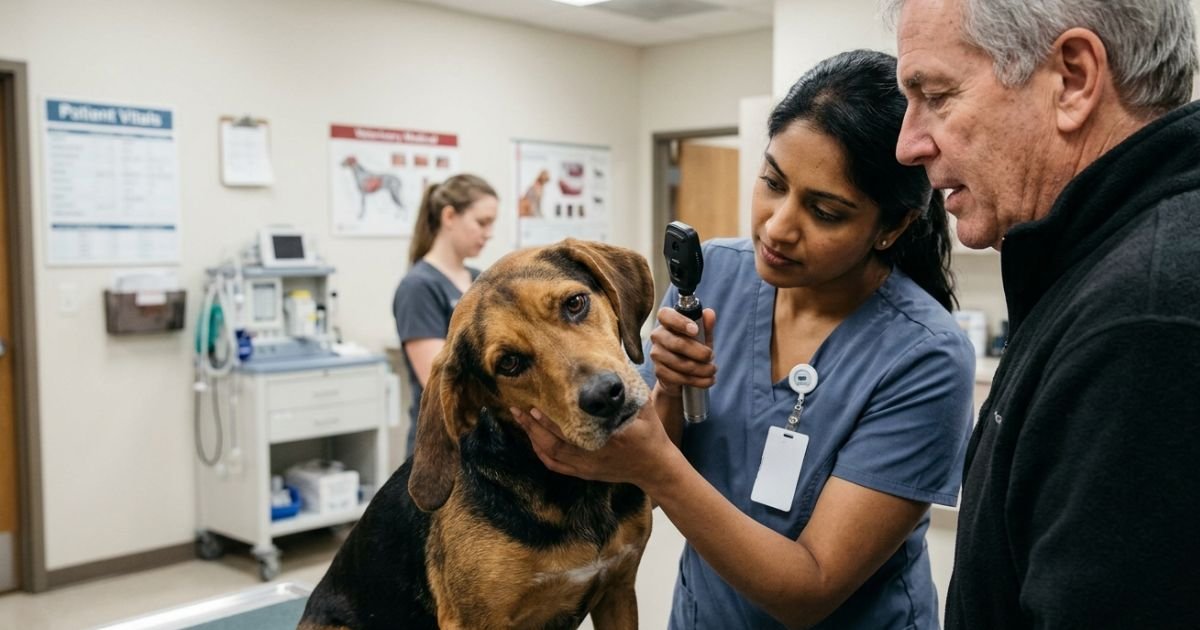
Vestibular disease in dogs is a condition that affects balance and coordination, often causing symptoms like head tilt, dizziness, falling, and abnormal eye movements. It is more common in older dogs and can appear suddenly, making pets seem confused or unable to walk properly. Causes may include ear infections, nerve problems, or age-related conditions affecting the vestibular system.
What Is Canine Vestibular Disease?
Your dog’s vestibular system is their internal GPS. It lives deep inside the inner ear and connects directly to the brain. This system tells your dog which way is up, down, left, and right.
When this system fails, the GPS breaks. Your dog suddenly feels like they are spinning on a carnival ride that will not stop. They cannot find their footing. They feel dizzy, confused, and often quite nauseous.
Vets divide this condition into two main types: peripheral and central. Peripheral means the problem is in the inner ear. Central means the issue sits inside the brain.
Here is a quick look at how they differ:
| Feature | Peripheral Vestibular Disease | Central Vestibular Disease |
| Location | Inner or middle ear | Brain (brainstem or cerebellum) |
| Severity | Usually mild to moderate | Often severe |
| Common Causes | Ear infections, old age | Tumors, brain trauma, infections |
| Other Signs | Facial drooping | Weakness in the legs, changed mental state |
| Recovery | Excellent | Varies widely based on the cause |
Symptoms of Balance Disorders in Dogs
When a balance disorder hits, it hits hard and fast. Your dog might be perfectly fine at breakfast and unable to walk by lunch. The signs are impossible to miss.
Look out for these core symptoms:
- A severe head tilt: Your dog will lean their head heavily toward the side of the problem.
- Ataxia: This is a fancy word for drunken, uncoordinated walking. They will stumble, stagger, or fall over.
- Nystagmus: Their eyes will quickly flick back and forth, up and down, or in circles.
- Circling: They may walk in tight circles in the same direction.
- Nausea and vomiting: All that spinning makes them deeply motion sick.
How to Recognize It Early
You want to catch this quickly to keep your dog comfortable. Watch for subtle early warning signs. Refusing to eat is often the first clue. They might also drool excessively because they feel sick.
You might notice them leaning against walls or furniture for support. If your dog suddenly hugs the sofa while walking, call your vet.
Causes: Why Did This Happen?
You want answers. Why did your perfectly healthy dog suddenly lose their balance? The truth is, there are a few different culprits.
The most common culprit is idiopathic vestibular syndrome. “Idiopathic” simply means we do not know why it happens. It usually strikes older dogs out of nowhere. We call it “old dog syndrome.”
Other common causes include deep inner ear infections. If bacteria push past the eardrum, they can inflame the balance center. Hypothyroidism, or a sluggish thyroid gland, can also trigger these episodes. In rare cases, trauma to the head or ototoxic drugs (medicines toxic to the ear) are to blame.’
Read More: Robert Redford Disease Health
Can Stress Cause Balance Issues in Dogs?
You might wonder if your recent house move or a loud thunderstorm sparked this event. The short answer is no. Stress does not directly cause your dog’s GPS to break.
However, stress makes recovery much harder. A stressed dog will pant, pace, and elevate their heart rate. This makes the dizziness and nausea feel much worse. Keeping them calm is your top priority.
How to Treat Vestibular Disease in Dogs
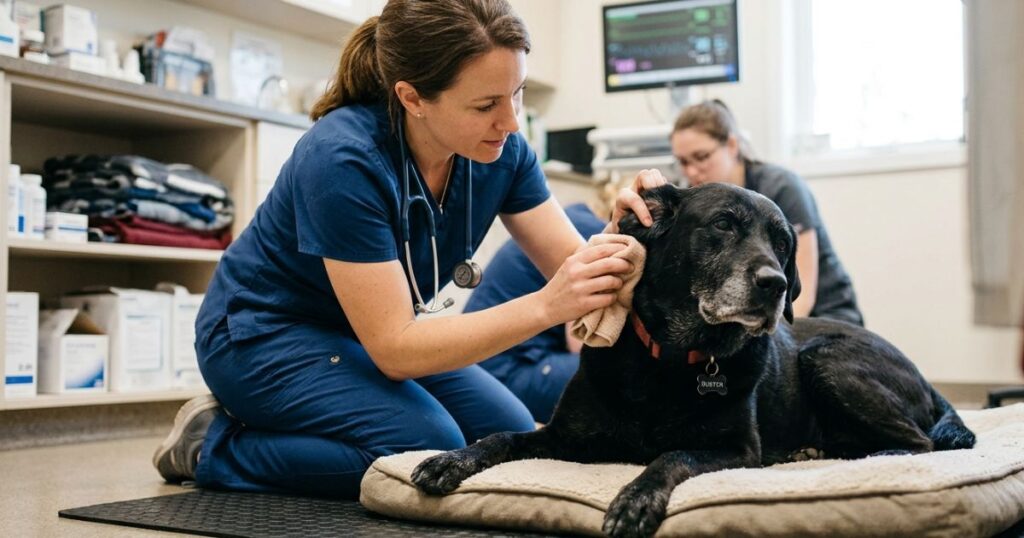
When you rush to the vet, they will run a neurological exam. They will check your dog’s ears, eyes, and reflexes. They might pull blood to check thyroid levels or suggest an MRI to rule out brain tumors.
Once diagnosed, the treatment focuses entirely on keeping your dog comfortable while their body heals.
Step-by-Step Guide to Caring for Your Dog
You are your dog’s best nurse. Here is exactly how to help them at home:
- Block off danger zones: Put up baby gates near stairs. Block off sharp corners. Keep your dog in a safe, flat, carpeted room.
- Provide anti-nausea meds: Your vet will likely prescribe motion sickness drugs like Maropitant or Ondansetron. Give these exactly as directed.
- Offer water by hand: Your dog might be too dizzy to bend down to their bowl. Bring the water bowl to their mouth or use a large syringe to gently squirt water into their cheek.
- Use a support sling: Wrap a thick towel under their belly to help them walk outside for bathroom breaks. This stops them from falling and injuring themselves.
- Hand-feed soft food: Hard kibble can be tough to chew when dizzy. Offer wet food, boiled chicken, or white rice directly from your hand.
Recovery and Prognosis for Vestibular Disease in Dogs
The first 48 hours are the worst. Your dog will look miserable, and you will feel helpless. But hold on, because the turnaround is usually spectacular.
Within three to four days, the rapid eye flicking will stop. Your dog will stop vomiting. They will start trying to walk on their own. By day seven, they will likely be eating normally and walking with just a slight wobble.
How Long Does It Take for Dogs to Recover?
For the idiopathic “old dog” version, expect a full recovery in two to three weeks.
Sometimes, a dog will keep a permanent, slight head tilt. They might look at you like you just asked them a confusing question for the rest of their life. Do not worry. This does not hurt them, and it does not affect their quality of life. They just adapt to their new normal.
Expert Insights: A Veterinarian’s Perspective
Let us look at a real-world scenario. Dr. Sarah Jenkins, a leading veterinary neurologist, sees these cases weekly. She notes that the biggest danger isn’t the disorder itself—it is the owner’s panic.
“I have seen countless owners rush into the clinic demanding we put their senior dog to sleep because they believe the dog had a massive stroke,” Dr. Jenkins explains. “Once we give the dog some anti-nausea medicine and IV fluids, they are eating chicken from my hand the very next day.”
Take the case of Buster, a 12-year-old Labrador. Buster woke up completely unable to walk. His owners were devastated. After a thorough exam and a prescription for Maropitant, Buster went home. With a belly sling and some boiled rice, he was walking unaided in five days. By week three, Buster was back to chasing tennis balls, albeit with a charming little head tilt.
Conclusion
Vestibular disease in dogs can be frightening for pet owners, but many dogs recover with proper care and treatment. Early diagnosis and veterinary attention are important to identify the underlying cause and improve recovery. With supportive care, many dogs regain their balance and return to normal activities over time.
FAQs
What is the main cause of this condition?
The most common cause in older dogs is idiopathic vestibular syndrome, meaning the exact cause is unknown. In younger dogs, deep inner ear infections are the usual suspect.
Can this condition go away on its own?
Yes. If the cause is idiopathic, the symptoms usually resolve naturally over two to three weeks. Your vet provides medication simply to stop the dizziness and nausea while the body heals itself.
How do I know if my dog has this or a stroke?
Strokes in dogs are incredibly rare, while balance disorders are very common. A vet can tell the difference by checking for weakness in the limbs and altered mental states, which point to a stroke rather than a simple ear issue.
What should I feed my dizzy dog?
Stick to highly digestible, bland foods. Boiled chicken breast and plain white rice are perfect. Hand-feed them small portions so they do not have to lower their head, which makes dizziness worse.
Can it be prevented?
You cannot prevent the idiopathic type, but you can prevent ear infection-related cases. Clean your dog’s ears regularly and treat any minor ear scratching before it becomes a deep infection.
