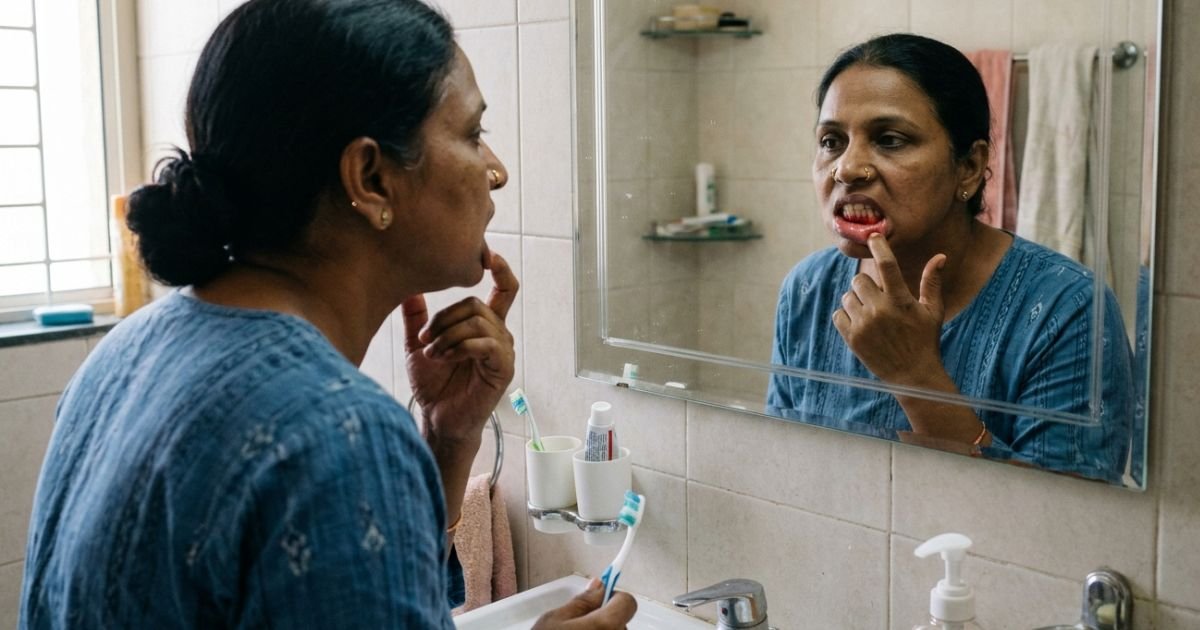
Gum disease, also known as gingivitis or periodontal disease, is a common oral health problem caused by plaque buildup, bacteria, and poor dental hygiene. While professional dental care is the safest option, mild gum disease can sometimes be managed at home using proper oral hygiene, saltwater rinses, natural remedies like aloe vera, and improved brushing and flossing habits. Early care is important to prevent the condition from getting worse.
Why People Search for “How to Cure Gum Disease Without a Dentist”
Let’s be honest about why you’re here.
Maybe your gums bled this morning and you panicked. Maybe a dental visit costs more than your car payment. Maybe the smell of a dentist’s office gives you genuine anxiety. You’re not alone. Roughly 36% of Americans avoid the dentist due to fear, and over 68 million adults skip care because of cost, according to the American Dental Association.
The good news? If your gum disease is in its early stage, you have real power to fix it from home. The not-so-good news? You need to know exactly when home care stops being enough and when ignoring it can cost you your teeth.
This guide gives you both. No clickbait. No fake cures. Just what works, what doesn’t, and what to watch for.
What Is Gum Disease? Understanding the Two Stages
Gum disease also called periodontal disease is what happens when bacteria build up along your gum line and your body fights back with inflammation. The problem? That same inflammation, left unchecked, can destroy the tissue and bone holding your teeth in place.
It comes in two distinct stages. Understanding the difference is everything.
Stage 1 Gingivitis (Reversible)
Gingivitis is the early warning shot. Your gums get red, puffy, and bleed when you brush or floss. There’s no permanent damage yet your jawbone is untouched, your teeth are stable, and your body is essentially saying “fix this, please.”
Here’s the encouraging part: with proper home care, gingivitis can be completely reversed in 2 to 4 weeks. Your gums can return to their healthy pink color, the bleeding stops, and you’re back to baseline.
Stage 2 Periodontitis (Manageable, Not Curable at Home)
This is where the conversation gets serious. Once gingivitis progresses to periodontitis, the bacteria have moved below the gum line. They start eating away at the bone that holds your teeth in. Gum pockets form. Teeth begin to loosen. And here’s the hard part bone loss is permanent.
No mouthwash, oil, or herbal rinse can regrow lost bone. That requires a periodontist, deep cleaning, and sometimes surgery. Anyone telling you otherwise is selling you something.
Quick Comparison: Gingivitis vs. Periodontitis
| Feature | Gingivitis | Periodontitis |
| Reversible at home? | Yes | No (only manageable) |
| Bone loss? | No | Yes permanent |
| Bleeding gums? | Mild | Heavy, frequent |
| Tooth looseness? | None | Yes |
| Gum recession? | Minimal | Visible |
| Healing timeline | 2–4 weeks | Lifelong management |
| Treatment needed | Home care | Professional + home care |
If you’re not sure which stage you’re in, the next section helps you self-check.
How Do You Know If You Have Gum Disease?

Your gums talk to you. Most people just aren’t listening.
Here are the 8 most common signs ranked from earliest warning to “call a dentist this week”:
- Pink in the sink bleeding when you brush or floss (early)
- Red or puffy gums instead of healthy pink (early)
- Persistent bad breath that doesn’t go away with brushing (early-to-moderate)
- Tender or sore gums especially when chewing (moderate)
- Receding gums your teeth look longer than they used to (moderate)
- A bad taste in your mouth that won’t leave (moderate)
- Pus between your teeth and gums (severe see a dentist)
- Loose or shifting teeth (severe see a dentist immediately)
Quick rule of thumb: If you’re in signs 1–4, home treatment is genuinely worth trying. If you’re in signs 5–6, you can try it for 2 weeks while watching closely. If you’re in 7–8, stop reading and call a dental clinic today.
10 Proven Home Remedies to Treat Gum Disease Without a Dentist
These are the remedies with actual research behind them not Pinterest folklore. Use 3 to 4 consistently. Mixing all 10 isn’t better; consistency is what wins.
Read More: Christina Applegate Disease
1. Saltwater Rinse Your First Line of Defense
Salt is nature’s antiseptic. It pulls fluid out of swollen tissue, kills bacteria, and soothes inflamed gums almost instantly.
How to use it: Dissolve ½ teaspoon of salt in 8 oz of warm water. Swish gently for 30 seconds, then spit. Do this 2 to 3 times a day especially after meals.
Don’t swallow it. Don’t use hot water (it irritates). This is the cheapest, simplest, and most underrated remedy on this list.
2. Hydrogen Peroxide Rinse The Bacteria Killer
A 2020 study published in dental research journals found that rinsing with diluted hydrogen peroxide significantly reduces plaque and oral bacteria.
How to use it: Mix equal parts 3% hydrogen peroxide and water. Swish for 30 seconds. Spit. Rinse your mouth with plain water after. Use it once daily for 1 to 2 weeks — not forever, since long-term use can irritate tissue.
Never swallow hydrogen peroxide. And never use undiluted.
3. Oil Pulling with Coconut Oil The Ancient Routine
Coconut oil contains lauric acid, which has natural antimicrobial properties. A 2020 study found coconut oil pulling significantly reduces plaque and gingivitis symptoms.
How to use it: Swish 1 tablespoon of coconut oil in your mouth for 10 to 20 minutes, then spit it into the trash (not the sink, it clogs pipes). Do this once daily, ideally in the morning before brushing.
The first time feels weird. By day 5, it feels normal.
4. Green Tea The Antioxidant Powerhouse
Green tea is loaded with catechins plant compounds that fight the bacteria behind gum inflammation. A landmark Japanese study found that drinking just one cup of green tea daily was associated with healthier gums.
How to use it: Brew a fresh cup. Drink it unsweetened. Let the last sip swish around your mouth for a few seconds before swallowing. Two cups a day is the sweet spot.
5. Tea Tree Oil Mouthwash The Hidden Hero
Most articles skip this one. They shouldn’t. Tea tree oil has powerful antibacterial properties that rival some commercial mouthwashes.
How to use it: Add 2 drops of tea tree oil to a cup of water. Swish for 30 seconds. Spit. Don’t swallow tea tree oil is toxic if ingested. Use once daily.
If you have sensitive gums, start with one drop and work up.
6. Sage Mouthwash The Forgotten Remedy
A 2024 study found that sage mouthwash significantly reduced signs of periodontitis. Sage is anti-inflammatory, antibacterial, and gentle.
How to make it: Boil 2 cups of water. Add 2 tablespoons of fresh sage (or 1 teaspoon dried) plus 1 teaspoon of salt. Simmer for 10 minutes. Strain. Cool. Rinse 2 to 3 times daily.
Store leftover sage rinse in the fridge for up to 3 days.
7. Aloe Vera Gel The Soother
Aloe vera doesn’t just calm sunburn. Research shows it has anti-plaque and anti-gingivitis properties and reduces gum bleeding.
How to use it: Use 100% food-grade pure aloe vera gel. Apply a small amount directly to inflamed gums with a clean finger, massage gently for 1 minute, then rinse with water. Or use as a mouthwash: swish for 30 seconds, spit.
8. Turmeric Paste The Anti-Inflammation Star
Turmeric’s active compound, curcumin, is a known anti-inflammatory and antimicrobial agent.
How to use it: Mix ¼ teaspoon of turmeric powder with enough water to make a paste. Apply to gums, leave for 10 minutes, rinse thoroughly. Use 2–3 times a week.
Yellow staining is real rinse well after.
9. Baking Soda Paste The pH Balancer
Baking soda neutralizes the acids that feed bacteria. It also gently breaks down plaque without abrasion (if used correctly).
How to use it: Mix a small amount of baking soda with water to form a paste. Brush gently with it 2 to 3 times a week not daily. Don’t scrub. Don’t replace your regular toothpaste with it.
10. Clove Oil The Pain Reliever
Clove oil contains eugenol, a natural anesthetic and antibacterial. It’s especially helpful if your gums are painful.
How to use it: Mix 1–2 drops of clove oil with 1 tablespoon of coconut oil. Apply with a cotton swab directly to sore gums. Don’t swallow. Use no more than once daily clove oil is potent.
What Foods Help Heal Gums (and What Foods Hurt Them)?
You can’t out-rinse a bad diet. What you eat feeds either your gums or the bacteria attacking them.
| Eat More | Eat Less |
| Citrus fruits (vitamin C powerhouse) | Sugar and soda (bacteria’s favorite fuel) |
| Leafy greens (folate + fiber) | Refined white carbs (turn to sugar fast) |
| Fatty fish like salmon (omega-3s reduce inflammation) | Sticky candy (clings to teeth, feeds plaque) |
| Plain yogurt (probiotics for oral microbiome) | Alcohol (dries the mouth, weakens defenses) |
| Green tea (catechins fight bacteria) | Tobacco (the #1 gum disease accelerator) |
| Almonds and walnuts (calcium + healthy fats) | Energy drinks (acidic + sugar bomb) |
Pro tip: If you do nothing else, cut soda for 30 days. The change in your gums alone will surprise you.
What Vitamins and Supplements Support Gum Healing?
Your gums are tissue. Tissue needs nutrients to heal. Here’s what the research says actually helps:
- Vitamin C essential for collagen, the protein that holds gum tissue together. Deficiency causes bleeding gums. Aim for 75–90 mg daily through food or supplement.
- Vitamin D supports immune function and bone health. Low vitamin D is linked to higher periodontitis risk. 1,000–2,000 IU daily is a common starting point.
- Coenzyme Q10 (CoQ10) small studies suggest it improves gum healing. Try 100–200 mg daily.
- Omega-3 fatty acids reduce inflammation systemwide. 1,000 mg of EPA/DHA daily is a research-supported dose.
- Zinc supports tissue repair and immune response. Look for 8–11 mg daily through diet or supplement.
- Calcium supports the jawbone that anchors your teeth. 1,000 mg daily through dairy, leafy greens, or supplement.
Always check with a doctor before starting supplements, especially if you take medications.
Lifestyle Habits That Speed Up Gum Healing
Most articles stop at remedies. They shouldn’t. Your daily habits decide how fast your gums recover.
Stress Management
Chronic stress raises cortisol, which weakens your immune response. A weakened immune system means slower healing and more bacterial overgrowth. Just 10 minutes of daily breathwork, walking, or meditation can measurably reduce cortisol within 2 weeks. This is the most underrated dental tip on the internet.
Sleep and Oral Recovery
Your body repairs tissue most aggressively during deep sleep. If you’re getting under 7 hours nightly, your gums are healing in slow motion. Aim for 7 to 9 hours and try to keep it consistent.
Quit Smoking (and Vaping)
The CDC reports that smokers are twice as likely to develop gum disease as non-smokers. Smoking restricts blood flow to the gums, which means less oxygen, less healing, and more bacteria. Vaping isn’t a safe alternative early research shows similar gum damage. The first 30 days are the hardest. The first 90 days change everything.
Hydration and Saliva Production
Saliva is your mouth’s natural defense system. It washes away food, neutralizes acid, and carries antibacterial enzymes. Dry mouth = bacterial paradise. Drink half your body weight in ounces of water daily (so 75 oz if you weigh 150 lbs). Skip the sugary drinks.
Read More: White Matter Disease
How Long Does It Take to Heal Gum Disease at Home?
Realistic expectations save you from giving up too soon. Here’s what to expect with consistent care:
| Timeline | What You’ll Notice |
| Days 1–3 | Slight reduction in bleeding when brushing |
| Week 1 | Less swelling, mouth feels fresher |
| Week 2 | Gums look noticeably pinker and firmer |
| Week 3–4 | Bleeding minimal or gone, full gingivitis reversal possible |
| Beyond 4 weeks | If you see no improvement, call a dentist period |
Important: If your symptoms are getting worse instead of better at any point stop and book an appointment. You may be dealing with periodontitis that home care can’t reach.
When You Absolutely Need to See a Dentist (Red Flags)
There’s no shame in needing a professional. There’s only shame in waiting too long. Call a dentist within 48 hours if you notice any of these:
- Pus or discharge between teeth and gums
- Severe pain that doesn’t respond to over-the-counter painkillers
- Teeth that feel loose or have shifted position
- Bleeding that won’t stop even after gentle brushing
- A hard lump or abscess along the gum line
- Fever or facial swelling alongside gum pain
- No improvement after 3 to 4 weeks of consistent home care
Many community dental clinics offer sliding-scale fees. Dental schools provide low-cost care. You have options.
Expert Insight: What a Dental Hygienist Wants You to Know
The following insight reflects guidance commonly shared by licensed dental hygienists in the United States.
When asked what most people get wrong when treating gum disease at home, hygienists tend to point to the same three mistakes:
The second most common mistake? Skipping floss. Brushing alone reaches only about 60% of your tooth surface. The rest including the space where gum disease starts — needs floss or a water flosser.
The third? Quitting too early. Your gums need 14 to 21 days of consistent care before you see real change. Most people give up at day 7 and assume it’s not working. Give it the full month.
The bottom line from the pros: Home care works beautifully for gingivitis. But if you’re in your second month of trying with no improvement, you’re past the home-care line. See a professional.
Read More: Fifth Disease Symptoms
Conclusion
Curing gum disease without a dentist is only possible in the early stages through consistent oral care and natural remedies. However, if symptoms persist or worsen, professional dental treatment is necessary to avoid serious complications like tooth loss. Maintaining good oral hygiene is the key to long-term gum health.
FAQs
Can gum disease be cured at home permanently?
Early-stage gum disease (gingivitis) can be fully reversed at home with consistent oral hygiene and natural remedies usually within 2 to 4 weeks. Advanced gum disease (periodontitis) cannot be cured at home. It can only be managed alongside professional treatment, since bone loss is permanent.
What kills gum disease bacteria naturally?
The most effective natural bacteria-killers are saltwater rinses, diluted hydrogen peroxide, tea tree oil mouthwash, and green tea. Coconut oil pulling also reduces bacterial load. Combining 2 to 3 of these consistently works better than rotating through all of them randomly.
How fast can gingivitis be reversed?
With daily brushing, flossing, and a consistent rinse routine, most people see real improvement in 7 to 14 days, and full reversal within 2 to 4 weeks. If you don’t see change by week 4, you may be dealing with something more advanced.
Can salt water alone cure gum disease?
Salt water is one of the most effective and gentle remedies — but on its own, it’s not a complete cure. It reduces inflammation and bacteria, but you still need proper brushing, flossing, and ideally one or two other supportive remedies for full results.
Is gum disease an emergency?
Most cases aren’t emergencies. But you should treat it as urgent if you have pus, severe pain, loose teeth, facial swelling, or fever. These signs point to a deep infection that home care cannot resolve and requires same-day or next-day professional treatment.
