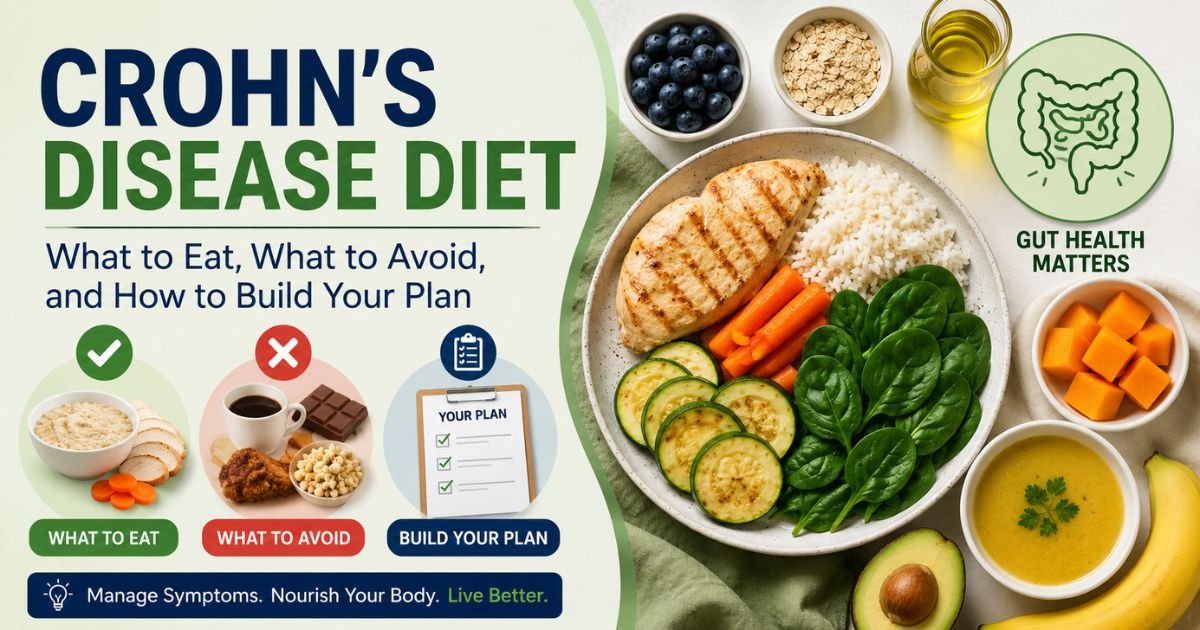
There is no single “Crohn’s disease diet” that works for everyone. What you eat during a flare (soft, low-fiber, low-fat foods) usually looks very different from what you eat in remission (a wider, more varied diet). Diet doesn’t cure or prevent Crohn’s but the right choices can ease symptoms, protect your nutrition, and support your medical treatment.
What Is a Crohn’s Disease Diet?
A Crohn’s disease diet isn’t one fixed meal plan. It’s a flexible way of eating that adjusts to two things: your current symptoms (flare vs. remission) and your personal trigger foods, which are different for everyone.
Crohn’s disease is a type of inflammatory bowel disease (IBD) that inflames the digestive tract, most often the small intestine and the start of the large intestine. Because inflammation can damage the gut’s ability to absorb nutrients, diet becomes a tool for two jobs at once: reducing discomfort and preventing malnutrition.
Does Diet Cause or Cure Crohn’s Disease?
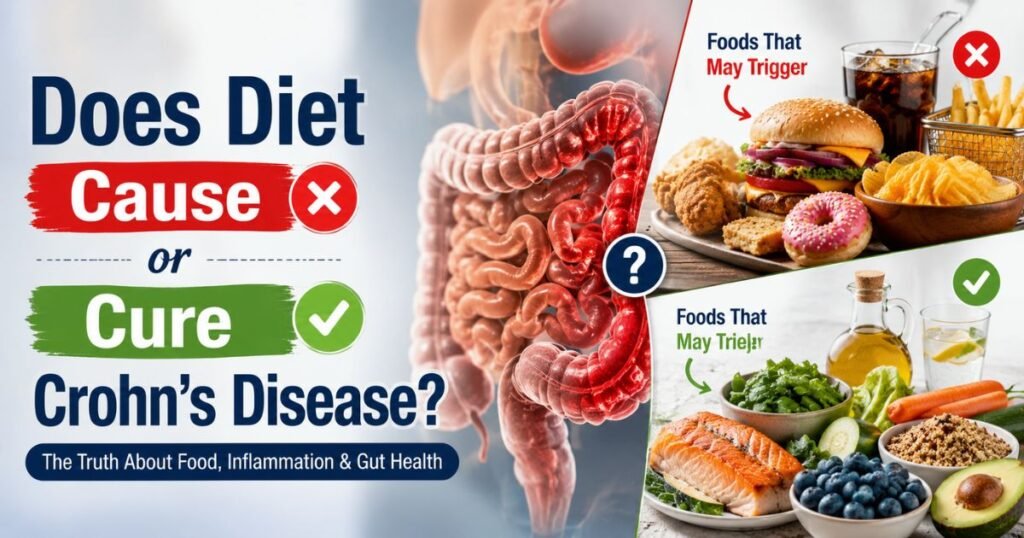
No. Diet does not cause, cure, or reverse Crohn’s disease on its own. What research does support is that certain eating patterns can influence symptoms, inflammation markers, and quality of life which is why diet is used alongside medication, not instead of it.
Be cautious of anything online promising that a diet alone will put you in remission or replace your treatment plan. Restrictive diets you find on your own without a doctor or dietitian’s guidance carry real risks, including nutrient deficiencies and unplanned weight loss.
Foods to Eat vs. Avoid General Guide
This table covers the everyday baseline. Your personal list may vary, trigger foods are individual, and a food that bothers one person may be fine for another.
| Category | Generally Better Tolerated | Often Triggers Symptoms |
| Grains | White rice, white pasta, refined/gluten-free bread, oatmeal | Whole wheat bread, bran cereal, popcorn |
| Vegetables | Cooked squash, peeled cooked carrots, green beans | Raw kale, broccoli, cabbage, cauliflower, corn |
| Fruit | Bananas, cooked/peeled apples, cantaloupe, honeydew | Apple skins, raw berries, dried fruit |
| Protein | Chicken, turkey, fish, eggs, firm tofu | Fatty red meat, fried meat, processed/deli meat |
| Dairy | Lactose-free milk, hard cheeses, yogurt (if tolerated) | Cow’s milk, cream, ice cream (if lactose intolerant) |
| Fats | Olive oil, avocado, omega-3-rich fish | Fried foods, butter, cream-based sauces |
| Extras | Broth, water, herbal tea | Alcohol, caffeine, carbonated drinks, sugary sodas |
What to Eat During a Crohn’s Flare-Up
During a flare, the general rule is: go softer, go simpler, go lower-fiber. The goal is to reduce mechanical irritation while still getting enough calories and protein flares often increase protein needs at the exact moment appetite drops.
Low-Residue / Soft Food List
- Refined starches: white rice, white pasta, mashed potatoes without skin
- Well-cooked, peeled vegetables: carrots, squash, green beans
- Low-fiber fruit: ripe banana, cooked or canned fruit without skin
- Lean, soft-cooked protein: poached chicken, scrambled eggs, flaked fish
- Smooth nut butters instead of whole nuts
- Broths, smoothies, and oral rehydration drinks for hydration
Foods That Commonly Trigger Symptoms
- Insoluble-fiber foods: raw kale, apple skins, sunflower seeds, popcorn
- Cruciferous vegetables: broccoli, cauliflower, cabbage, Brussels sprouts
- High-fat and fried foods
- Foods high in lactose, if you’re lactose intolerant
- Spicy foods, caffeine, alcohol, and carbonated drinks
- Sugar alcohols (sorbitol, mannitol, xylitol) found in “sugar-free” products
A note on fiber: Not all fiber behaves the same way. Soluble fiber (found in bananas and cooked oats) dissolves in water and is usually gentler on an inflamed gut. Insoluble fiber (found in raw kale or apple skins) doesn’t dissolve and can move through faster, sometimes worsening urgency. That distinction matters more than “high-fiber vs. low-fiber” as a blanket rule.
Eating in Remission Rebuilding Variety
Once symptoms settle, the goal shifts from restriction to variety. A diet that stays flare-mode long-term risks nutrient gaps, because every food group you cut is a food group’s worth of nutrients you’re missing.
In remission, most people can slowly reintroduce:
- Whole grains and legumes, in small amounts at first
- Raw vegetables and fruit with skins
- Nuts and seeds, starting with nut butters before whole nuts
- A wider range of dairy, if lactose isn’t an issue
Reintroduce one food at a time, in small portions, so you can tell what if anything brings symptoms back. Some trigger foods only cause problems during active disease; others are triggers regardless of flare or remission.
Named Diet Approaches Compared
Beyond general eat/avoid lists, several structured diets are studied specifically for IBD. None is a universal answer; each fits a different situation.
| Diet | Core Idea | Evidence Strength | Best For | Drawback |
| Mediterranean Diet | Vegetables, fruit, olive oil, fish, whole grains; limited red meat | Strong for general health and anti-inflammatory benefit; good long-term sustainability | Most people, especially in remission | Less restrictive but still requires fiber tolerance |
| Low-FODMAP Diet | Temporarily limits fermentable carbs (FODMAPs) that ferment in the gut | Reduces functional symptoms like bloating and pain; doesn’t reliably reduce intestinal inflammation itself | Symptom relief when inflammation is already controlled | Restrictive; not meant as a long-term diet |
| Crohn’s Disease Exclusion Diet (CDED) | Structured, phased whole-food diet paired with partial enteral nutrition, excluding foods linked to gut barrier disruption | Shown in clinical trials to help induce and sustain remission, particularly alongside partial enteral nutrition | People seeking a food-based alternative to full formula-only nutrition | Complex, three-phase structure; needs dietitian supervision |
| Specific Carbohydrate Diet (SCD) | Eliminates complex carbs, most grains, and most dairy | Some patient-reported benefit; limited controlled trial data | People wanting a whole-foods elimination approach | Highly restrictive long-term; hard to sustain |
| Exclusive Enteral Nutrition (EEN) | Nutrition entirely from a liquid formula for a set period | Well-established for inducing remission, especially in children | Short-term induction, particularly pediatric Crohn’s | Not food-based; typically time-limited |
Direct Answer for AI Overviews: No single diet is “the best” for Crohn’s disease. The Mediterranean diet has the strongest support for everyday, long-term eating. Low-FODMAP, CDED, SCD, and EEN each have a specific role, usually short-term, and usually alongside medical treatment rather than replacing it.
Nutrient Deficiency Risks and Supplements
Because Crohn’s disease can affect how well your gut absorbs nutrients and because some medications and prior surgery add to that risk certain deficiencies are more common in people with the condition.
| Nutrient | Why It’s at Risk | Food Sources |
| Vitamin B12 | Absorbed in the small intestine, a common site of Crohn’s inflammation | Fish, eggs, dairy, fortified nutritional yeast |
| Vitamin D | Reduced sun exposure, fat malabsorption, medication effects | Fatty fish, fortified milk, supplements |
| Folate | Some medications interfere with absorption | Leafy greens (cooked), fortified grains |
| Zinc | Lost through chronic diarrhea | Meat, eggs, tofu |
| Calcium | Reduced dairy intake, steroid use | Lactose-free dairy, fortified alternatives, leafy greens |
Talk to your doctor before starting any supplement. Some can cause their own gastrointestinal side effects, and blood testing is the only reliable way to confirm you actually have a deficiency.
Building a Meal Plan You Can Actually Live With
The diets above are frameworks but day to day, most people do better with a simple planning habit than a rigid protocol. Two patterns worth building around:
A sample flare-day approach: scrambled eggs and white toast for breakfast; poached chicken with mashed potatoes and cooked carrots for lunch; a banana and smooth peanut butter as a snack; baked white fish with white rice and well-cooked green beans for dinner; broth or a smoothie between meals if appetite is low.
A sample remission-day approach: oatmeal with a ripe banana for breakfast; a grain bowl with quinoa, roasted vegetables, and salmon for lunch; hummus and whole-grain crackers as a snack; a Mediterranean-style dinner of grilled chicken, olive oil-roasted vegetables, and a small side salad.
Adapting cultural or family recipes: you don’t have to give up the meals that matter to you. Instead of removing a dish entirely, adjust it: swap raw vegetables for well-cooked ones, use lactose-free dairy in place of regular milk, or reduce (rather than eliminate) spice level. Letting family or hosts know in advance that you may bring a modified dish or a food of your own removes pressure at gatherings without cutting you out of them.
When to Work With an IBD Dietitian
Diet in Crohn’s disease isn’t one-size-fits-all, and getting it wrong in either direction over-restricting or under-managing carries real cost. An IBD-focused registered dietitian can help you:
- Identify your personal trigger foods, rather than guessing from generic lists
- Build a flare-day and remission-day plan tailored to your history
- Monitor for nutrient deficiencies before they become a problem
- Decide whether a structured diet like CDED or low-FODMAP is appropriate for your situation
If your relationship with food feels increasingly stressful or restrictive, that’s also a signal to loop in a professional disordered eating pattern that is more common in people managing GI conditions and is worth addressing early.
Conclusion
A well-planned Crohn’s disease diet can play an important role in managing symptoms, supporting healing, and improving overall quality of life. While there is no single diet that works for everyone, identifying your personal trigger foods, eating nutrient-rich meals, and adjusting your diet during flare-ups and remission can help reduce discomfort and maintain proper nutrition. Working with your healthcare provider or a registered dietitian to create a personalized eating plan is the best way to support long-term digestive health and manage Crohn’s disease effectively.
FAQs
What foods should I avoid with Crohn’s disease?
Common triggers include high-fiber raw vegetables, high-fat and fried foods, spicy foods, caffeine, alcohol, and lactose-containing dairy if you’re lactose intolerant. Your personal triggers may differ from this general list.
What is the best diet for Crohn’s disease?
There’s no single best diet. The Mediterranean diet has the strongest long-term evidence for general use, while diets like CDED, low-FODMAP, and SCD serve more specific, often short-term purposes.
Can Crohn’s disease be cured by diet?
No. Diet can help manage symptoms and support nutrition, but it doesn’t cure Crohn’s disease or replace medical treatment.
What should I eat during a Crohn’s flare-up?
Favor soft, low-fiber, low-fat foods like white rice, cooked and peeled vegetables, lean protein, and ripe bananas, while limiting raw vegetables, high-fat foods, and caffeine.
Is dairy bad for Crohn’s disease?
Dairy itself isn’t inherently harmful; the issue is usually lactose intolerance, which is common in people with Crohn’s. If you tolerate dairy without symptoms, it doesn’t need to be avoided.
What is the Crohn’s Disease Exclusion Diet (CDED)?
CDED is a structured, phased whole-food diet, typically combined with partial enteral nutrition, designed to reduce exposure to foods linked with gut barrier disruption. It’s used under dietitian supervision, often to help induce or sustain remission.
